
RC Edges T5S 2-1 in Three-Mode Scrim

RC leads T5S 2-1 in a compact Brawlytics practice snapshot dated October 2. Each displayed point comes from a different mode row. RC takes Heist and Hot Zone, while T5S takes Bounty, producing a narrow result with a clear objective-by-object split.
The card lists Heist at 1-0 for RC, Bounty at 0-1 and Hot Zone at 1-0. Those rows reproduce the displayed 2-1 aggregate. No mode is tied, so each row gives one side a specific positive reference. RC owns two objective modes; T5S owns the elimination-focused Bounty row.
The pairing is absent from the site’s seven-day archive, which makes the session a new topic. Its status remains limited to practice, and completion is unconfirmed. The score should be cited with the date and scrim label because the page records a training snapshot, not a tournament standing.
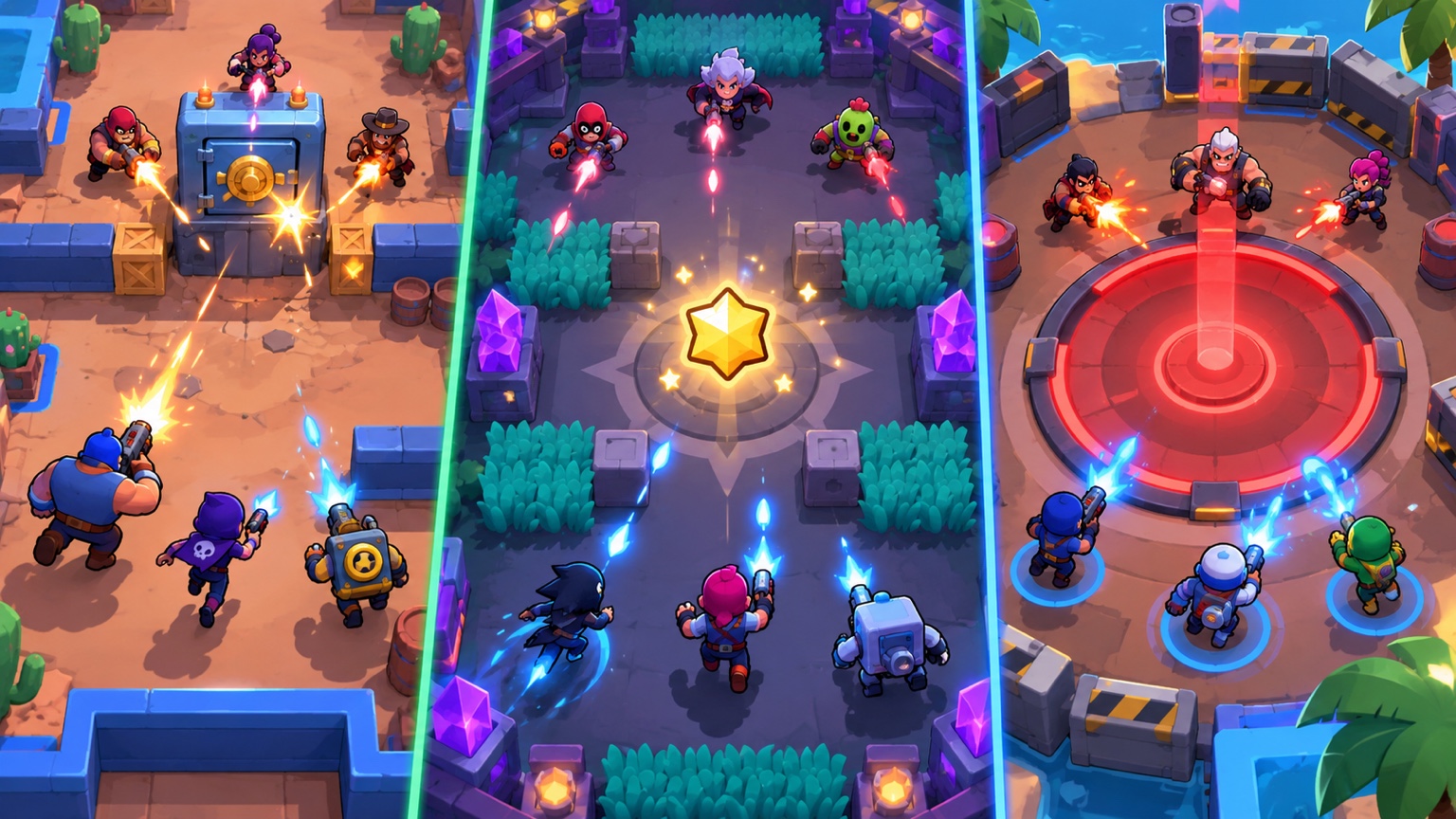
Every displayed mode changes the leader
Heist gives RC the opening point. Bounty then moves to T5S, leveling the visible comparison across the first two objectives. Hot Zone restores RC’s edge and creates the final one-point margin. That alternating pattern is the most useful feature of the card: neither side controls all three environments.
RC can compare the decisions shared by Heist and Hot Zone, particularly how the team established and maintained objective access. T5S can use Bounty as its stable reference and examine which spacing or target choices were harder to reproduce when a fixed objective entered the map. The public score contains outcomes, while drafts and player actions require replay evidence.
A three-row card supports precise review but offers a small sample. One change in any mode would alter the aggregate. That makes process more important than the headline: each team should identify the sequence that produced its winning rows and test whether it repeats on another map.
The narrow score also discourages broad conclusions about long-term strength. RC’s advantage is real inside the displayed snapshot, and T5S has an outright mode win. Future practice can be compared against each row separately, allowing improvement to remain visible even if the overall lead changes sides.
How the teams can use the snapshot
RC’s review can begin with objective entry, lane handoffs and closing discipline in Heist and Hot Zone. T5S can begin with the Bounty row, then compare the team’s survival and spacing there with the two lost modes. Both sides have a concrete success to preserve.
Readers should retain the original RC–T5S order when restating the numbers. The accurate description is an RC 2-1 lead across three displayed rows, with completion unconfirmed. A later update may add context, but this card already supplies a clean dated baseline.
- RC takes Heist and Hot Zone by identical 1-0 rows.
- T5S answers with a 1-0 Bounty result.
- Keep the practice label and October 2 date attached to the 2-1 aggregate.

| Mode | RC | T5S |
|---|---|---|
| Heist | 1 | 0 |
| Bounty | 0 | 1 |
| Hot Zone | 1 | 0 |
RC’s 2-1 edge over T5S is narrow and informative. The lead comes from Heist and Hot Zone, while Bounty belongs to T5S. That distribution gives both teams an immediate review anchor and avoids the impression that the session moved in only one direction. The sample contains three displayed rows, completion is unconfirmed and the data comes from practice, so the result belongs in a training context. Within that scope, it is a useful new pairing for the archive. RC can test whether its objective control transfers to future maps, and T5S can build from the spacing and survival that supported its Bounty point. The next meeting can be measured against all three modes instead of only the aggregate. A useful replay worksheet would mark the first stable lane, the moment objective access changed and the final successful conversion in every row. That gives each team the same review language and helps separate a repeatable decision from a single favorable exchange. It also creates a concrete checkpoint for the next practice card, even if that later session uses a different map rotation.