
TE and TRIBE Draw 6-6 Scrim
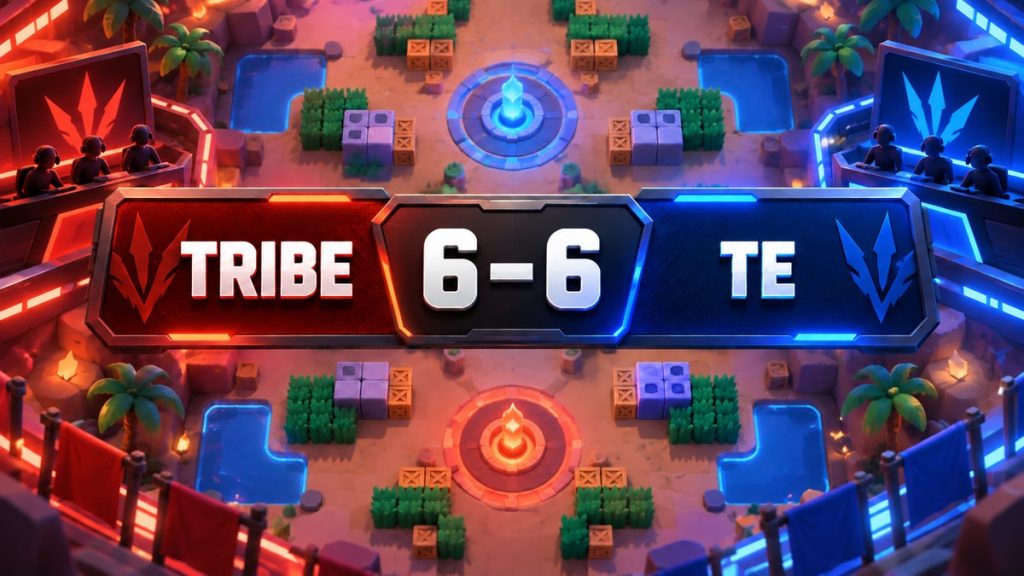
TE and TRIBE finished level at 6-6 in a Brawl Stars practice scrim recorded on September 9. The final number looks simple, but the five mode scores tell a more useful story: each team found clear advantages in two modes, while Gem Grab ended even. The balance came from strengths that appeared in different parts of the mode pool.
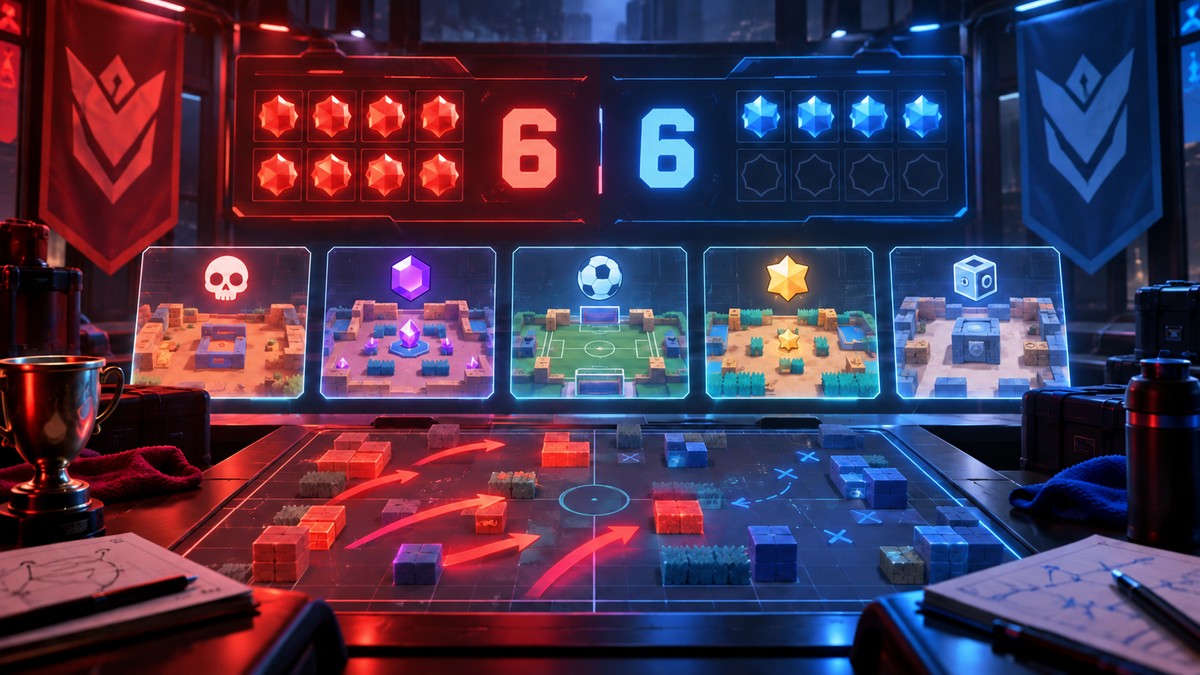
The Brawlytics match card lists TE first throughout. Gem Grab is recorded at 1-1, Brawl Ball at 1-2, Heist at 2-0, Knockout at 0-2 and Bounty at 2-1. Added together, those rows produce the 6-6 headline score. They also keep the result from being mistaken for five identical contests. TE’s strongest row was Heist, whereas TRIBE answered with the same two-score margin in Knockout. The narrower Brawl Ball and Bounty rows then pulled in opposite directions.
That distribution is the most important part of the record. TE collected four of its six scores from Heist and Bounty. TRIBE collected four from Brawl Ball and Knockout. Gem Grab contributed one to each side. The aggregate was even because neither team’s better modes covered the entire session. For coaches and players reviewing practice, that is more actionable than reading 6-6 as a generic stalemate: the questions worth revisiting are attached to particular modes.
How the 6-6 score was built
Heist and Knockout form the clearest pair in the card. Both ended 2-0, but for opposite teams. TE took the Heist row without conceding a listed score, and TRIBE did the same in Knockout. Those two results cancel each other in the overall arithmetic while pointing to very different areas for review. A level total can therefore contain two decisive segments hidden inside the overall tie. Coaches reviewing the card can start with those two rows because each one created a two-score swing.
Brawl Ball and Bounty provide the closer counterweight. TRIBE held the edge in Brawl Ball, 2-1, before TE held the edge in Bounty by the same score. Gem Grab remained 1-1. Read in mode order, the card changes direction several times: level, a TRIBE edge, a TE sweep, a TRIBE sweep, and a TE edge. That back-and-forth pattern produced the balanced final line while keeping any claims about momentum outside the available record.
Brawlytics labels the entry as a scrim, so the score works best as a record of practice. Teams use these sessions to test approaches and identify uncomfortable modes before their scheduled competition. The card supplies a compact snapshot for that work. Its strongest evidence concerns this particular five-mode session, which keeps the review focused on the rows that were actually recorded.
The fair takeaway is narrow and useful. TE can point to clean control of the Heist row and a Bounty edge. TRIBE can point to equally clean control of Knockout and the better Brawl Ball result. Both have an even Gem Grab row to inspect. The final score leaves each side with evidence of what worked and a clear list of modes where the other team had the advantage.
The useful review points
A sensible review starts with the two 2-0 rows because they created the largest mode-level swings. The next step is to compare the two 2-1 rows, where a single listed score separated the teams. Gem Grab can be examined on its own terms because it neither created nor erased an overall advantage. Keeping those jobs separate avoids turning the aggregate into a conclusion that the underlying rows cannot support.
- TE’s positive rows were Heist at 2-0 and Bounty at 2-1.
- TRIBE’s positive rows were Brawl Ball at 2-1 and Knockout at 2-0.
- Gem Grab finished 1-1, completing the arithmetic behind the 6-6 total.

| Mode | Recorded score (TE-TRIBE) | Mode edge |
|---|---|---|
| Gem Grab | 1-1 | Even |
| Brawl Ball | 1-2 | TRIBE |
| Heist | 2-0 | TE |
| Knockout | 0-2 | TRIBE |
| Bounty | 2-1 | TE |
The September 9 scrim ended as a genuine split result: TE and TRIBE both reached six, and both owned two mode rows. The scorecard gives each team something concrete to keep and something equally concrete to revisit. That makes the 6-6 more informative as a practice checkpoint than as a verdict on either roster.